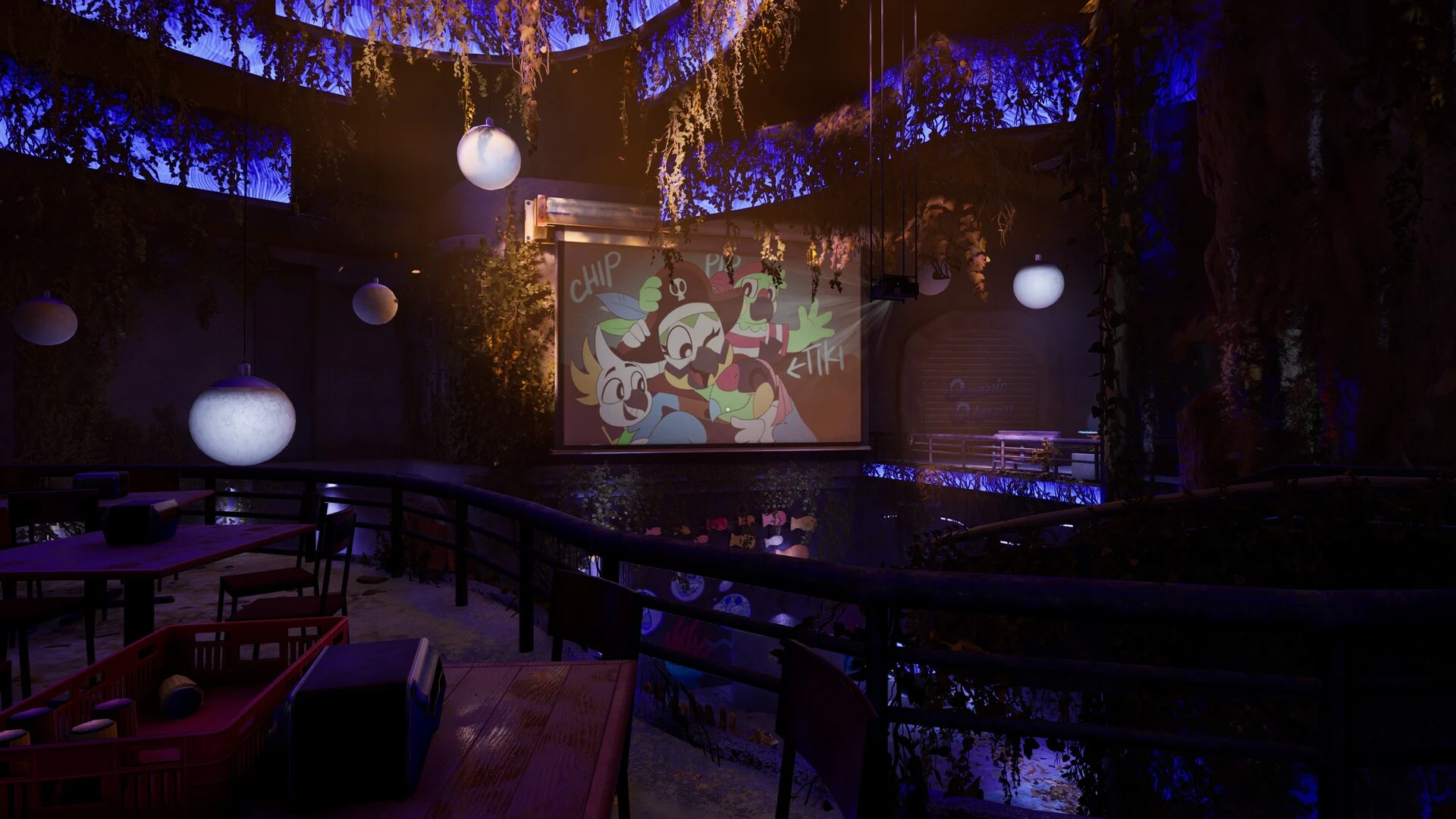
- Indigo Park Chapter 2 Pip is one of the park's mascot characters introduced in the second chapter.
- Role: Pip serves as a guide-style mascot whose interactions mix humor with creeping dread.
- Best strategy: Keep moving during his segments and watch audio cues carefully.
- Lore value: Pip's dialogue reveals key details about the park's abandonment timeline.
- Difficulty: Moderate — his encounters punish players who linger in open areas.
Who Is Pip in Indigo Park Chapter 2?
Indigo Park Chapter 2 continues the mascot-horror adventure where you explore a theme park that has sat abandoned for nearly eight years — the official trailer's welcome line places your arrival at "2,920 days" since the last guest walked through the gates. Within this decaying park, Pip stands out as one of the Chapter 2 mascots players encounter as they push deeper into sealed-off areas of the attraction.
Pip belongs to the ensemble of Indigo Park mascots that accompany Rambley the Raccoon, the park's enthusiastic AI guide whose cheerful narration contrasts sharply with the emptiness around you. Where Rambley is loud and welcoming, Pip's presence is more ambivalent — part of the chapter's shifting tone between family-friendly theme park charm and genuine menace.
Video Highlights:
- The official Chapter 2 trailer confirms the park's timeline: 2,920 days since the last guest.
- Rambley greets the player as the "first guest" in years, re-establishing the series' eerie hospitality.
- The trailer showcases new park areas that Pip's encounters are tied to.
Play Chapter 1 first. Pip's characterization in Chapter 2 builds directly on the mascot dynamics and tone established in the opening chapter.
Pip's Character Profile & Personality
Pip fits the classic Indigo Park formula: a mascot designed to be adorable on the surface, but whose behavior becomes unsettling the longer you stay in the park. Understanding his personality helps you anticipate how his encounters escalate.
| Trait | Description | Player Impact |
|---|---|---|
| Surface charm | Friendly, mascot-style presentation | Creates false sense of safety |
| Erratic behavior | Shifts between playful and hostile tones | Signals incoming chase sequences |
| Audio presence | Distinct sound cues before appearances | Key survival indicator |
| Park attachment | Behaves as a "guardian" of park territory | Discourages lingering in zones |
Playful Phase
- Mascot-like gestures
- Background observations
- Low immediate threat
Stalking Phase
- Brief silences in ambient audio
- Distant movement in view
- Time to reposition
Hostile Phase
- Direct pursuit begins
- Sprint and route memory required
- Escape to safe zones
Most of Pip's danger telegraphs come through sound design. Play with headphones — a sudden drop in ambient noise often means a hostile phase is about to start.
Step-by-Step: Surviving Pip's Encounters
Pip's sections reward preparation over reaction. Follow this sequence to get through his encounters cleanly.
Scout the Zone
Enter new areas slowly. Identify doorways, crawlspaces, and ride structures you can use as escape routes before Pip becomes active.
Listen for the Shift
Track changes in music and ambience. When the soundtrack thins out or Pip's sound cues appear, stop exploring and move toward your planned route.
Break Line of Sight
During pursuit, use corners, props, and ride vehicles to break Pip's line of sight. Straight-line sprinting alone rarely ends a chase.
Reach the Transition Point
Chase sequences end at scripted transition points — doors, elevator platforms, or tram sections. Prioritize reaching them over collecting optional items.
Don't rush back for collectibles mid-chase. Most optional items in Pip's zones can be collected on a calmer second pass once the area stabilizes.
Pip vs. Other Chapter 2 Threats
Pip is only one danger in the park. Comparing him to other Chapter 2 elements helps you allocate attention correctly.
| Threat Type | Behavior Pattern | Best Counter | Threat Level |
|---|---|---|---|
| Pip | Escalating mascot encounters with audio cues | Route planning, line-of-sight breaks | ★★★☆☆ |
| Static park hazards | Environmental traps in decayed areas | Slow movement, observation | ★★☆☆☆ |
| Other mascots | Patrol-based zones with patrol rhythms | Timing windows | ★★★★☆ |
| Scripted story threats | Fixed-sequence scares | Follow prompted actions | ★★☆☆☆ |
Pip's encounters are generally more forgiving than the chapter's patrol-heavy mascot zones, making his sections a good place to learn the game's chase mechanics.
Pip Lore & Collectible Checklist
Pip contributes to Chapter 2's broader mystery: why did Indigo Park close, and what happened to its guests and staff? His dialogue and the items around his zones feed into that puzzle.
Pip Zone Completion Goals:
- Complete all of Pip's encounter sequences
- Collect every lore item in his zone on one pass
- Listen to full dialogue exchanges before hostile phases
- Note any references to the park's closure date
- Cross-reference Pip's dialogue with Rambley's commentary
| Clue Source | What It Reveals | Where to Find |
|---|---|---|
| Pip dialogue | His view of guests and the park | Pre-chase interactions |
| Park signage | Timeline hints, ride history | Walls near his zones |
| Rambley commentary | Official park narrative gaps | Guided tour segments |
| Collectible items | Staff and guest perspectives | Hidden in side rooms |
Rambley's cheerful narration frequently omits or contradicts what the environment shows. Comparing his version of events against Pip's behavior is one of the fastest ways to piece together the real story.
FAQ
Q: Who is Pip in Indigo Park Chapter 2?
Pip is one of the mascot characters players encounter in Chapter 2. Like other Indigo Park mascots, his friendly presentation gives way to hostile pursuit behavior, and his dialogue contributes to the game's larger mystery about the abandoned park.
Q: Is Pip harder to deal with than Chapter 1 threats?
Pip's encounters are moderately difficult. They rely on audio cues and escalation rather than complex patrol patterns, so players who listen carefully and plan escape routes generally handle him well.
Q: Can you avoid Pip's chase sequences entirely?
No. The chases tied to Pip are scripted story moments that must be completed to progress. However, optional collectibles in his zones can be skipped during chases and collected later.
Q: Does Pip's lore connect to the park's closure?
Yes. Pip's dialogue and the environment around his zones add context to the timeline established by the series — including the roughly eight-year gap since the park's last guest referenced in the official Chapter 2 trailer.